Industry
Enterprise AI, Productivity, Workflow Automation
Client
Confidential (Internal-first product, later shipped to enterprise clients)
Agent-Canvas: A Multi-Agent Workspace
Multi-agent automation eliminated manual, repetitive steps
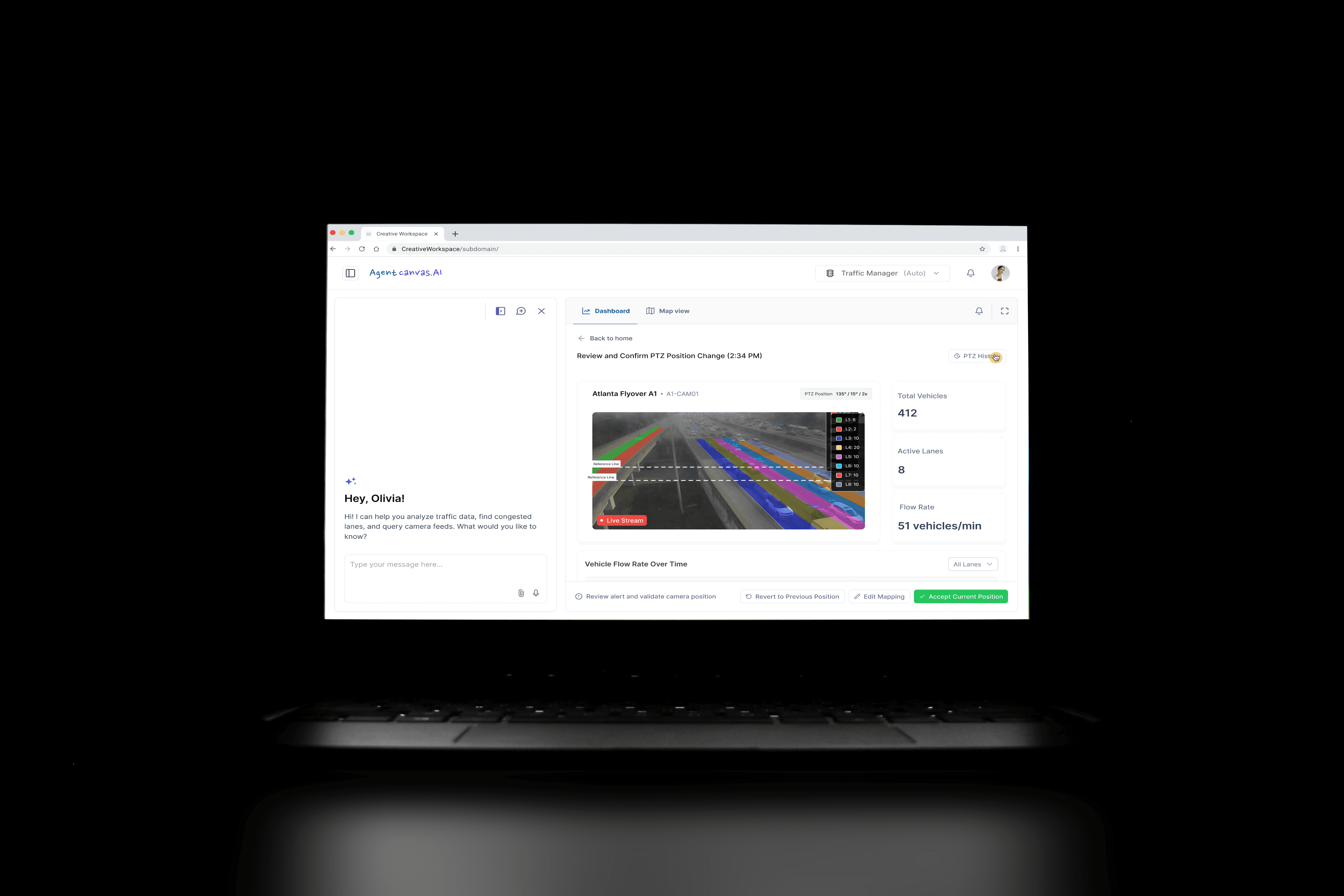
Mode-based agents reduced repetitive work and resourcing needs across teams (varies by workflow)
A new standard for multi-agent work inside the enterprise
AgentCanvas is a Web workspace built around a dual-surface pattern: an agent chat layer on the left and a mode-specific execution canvas on the right. Each mode represents an agentic approach to a real enterprise job-to-be-done, from legal drafting and proposal creation to code generation, data ingest, hiring workflows, project analysis, and content production.
My Role: Head of UX | From idea-to-production, then scale the product to clients with specific purpose
I owned UX strategy and interaction design end-to-end: ideation, IA, mode system design, artifact workflows, usability validation, and production delivery. The platform was built for internal teams first (to prove adoption and velocity), then hardened and shipped to enterprise clients to solve their problems at scale making sure that the user needs and the business needs are balanced.
Intelligent automation without overwhelming the user
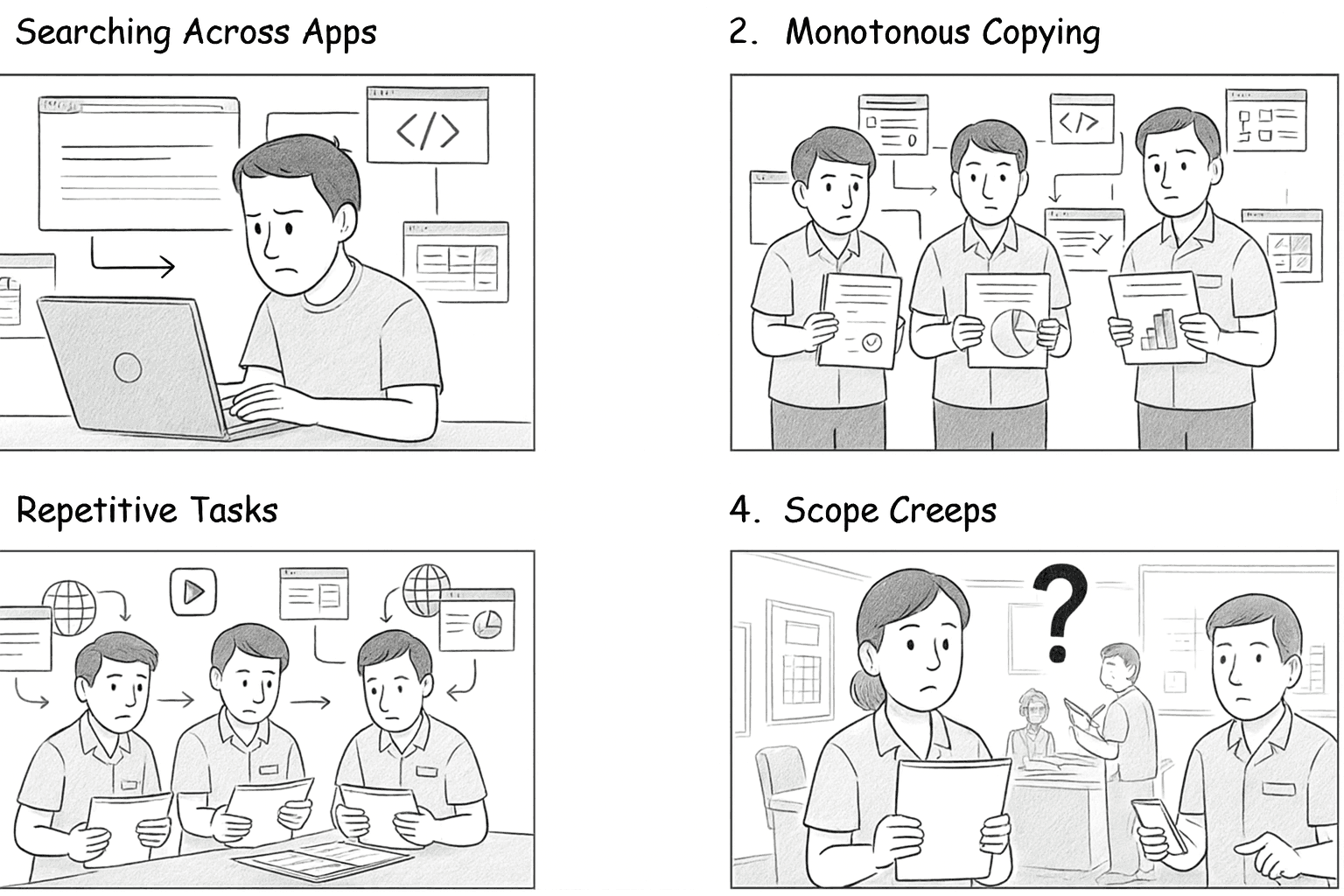
Enterprise users do not want “a chatbot.” They want outcomes: compliant docs, working code, clean project plans, accurate proposals. The challenge was to create a multi-agent system that feels simple, trustworthy, and controllable while handling complex workflows and integrating multiple sources of truth.
We studied how enterprise teams actually execute work, not how they describe it
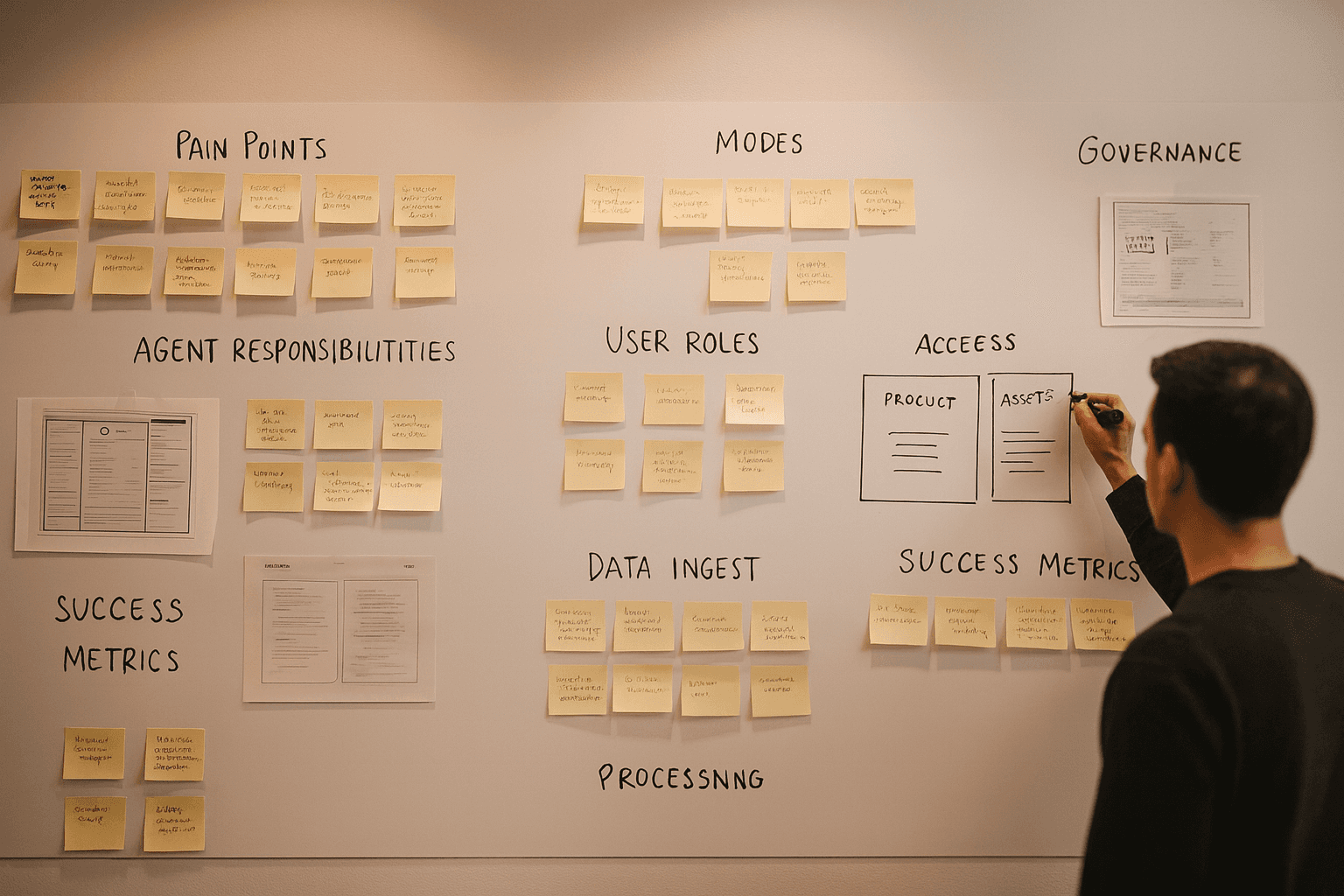
We mapped workflows across legal, proposal, hiring, data ingest, code generation, resource management, project analysis, and content production. A key insight: users think in deliverables and constraints (scope, dependencies, approvals), so agents must work inside that structure, not beside it. This directly shaped Product Owner Mode: source-of-truth inputs (SOW/contracts + notes + recordings) → structured outputs → traceable planning and dependency visibility.
Our vision: A dual-surface ecosystem for human–AI collaboration
We mapped workflows across legal, proposal, hiring, data ingest, code generation, resource management, project analysis, and content production. A key insight: users think in deliverables and constraints (scope, dependencies, approvals), so agents must work inside that structure, not beside it. This directly shaped Product Owner Mode: source-of-truth inputs (SOW/contracts + notes + recordings) → structured outputs → traceable planning and dependency visibility.


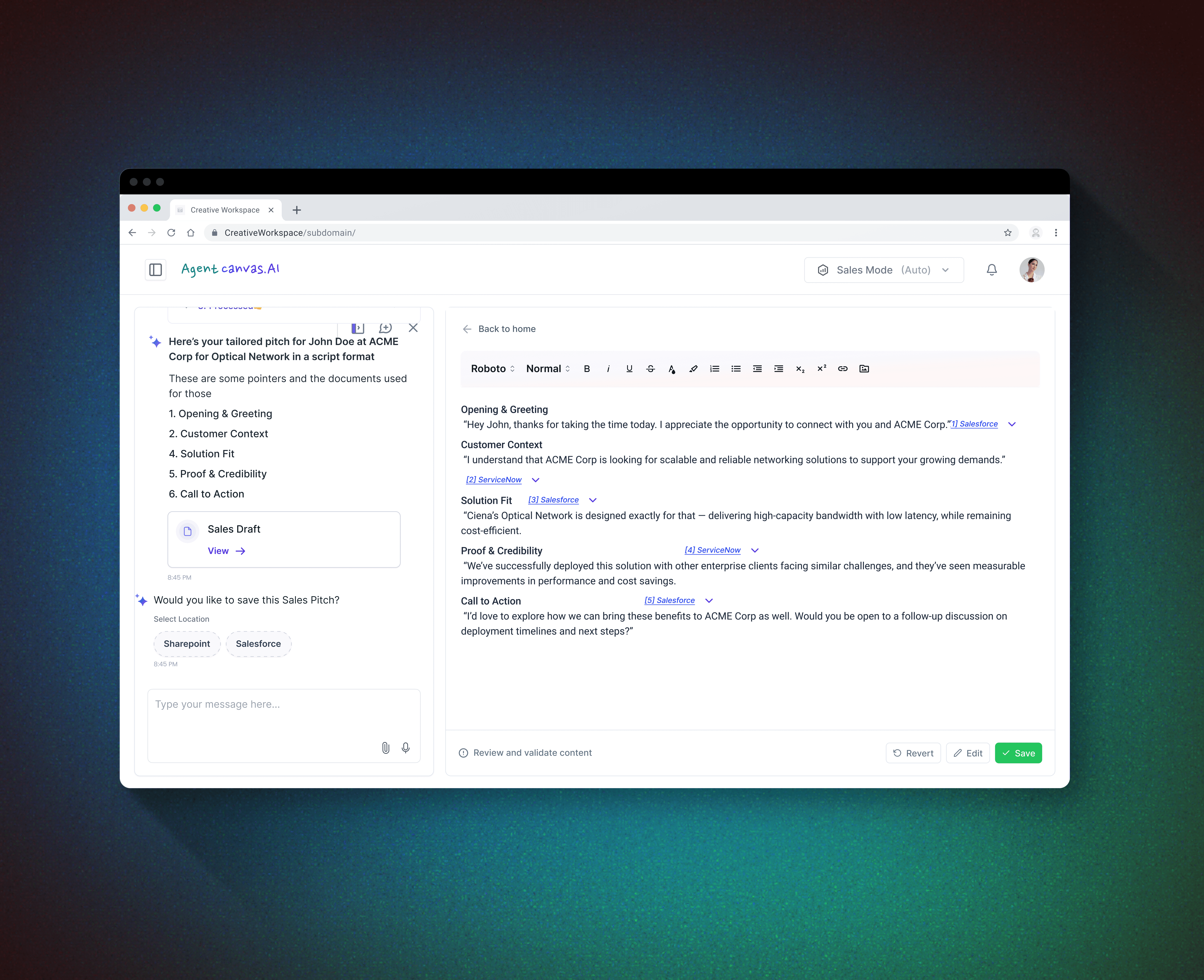
Execution philosophy: Designed fast, tested faster
To avoid building “AI theater,” we validated using: 1.Time-to-first-draft (docs, plans, proposals) 2. Edit effort after generation (how much humans must fix) 3. Increased workflow completion rate per mode 4. Implement user confidence signals (clarity, reversibility, traceability) Here's the catch, this is where most AI products lie. They ship demos, not systems. We designed a system.
Enterprise execution, powered by modes and multi-agent orchestration
AgentCanvas transformed fragmented workflows into a single chat-to-canvas system that delivers $1M+ design-influenced revenue, enables ~72% faster code-to-execution, and shortens project cycles by 30–40% through governed, mode-based execution.
Impact: Quantified outcomes that mattered to the business Less busywork, more judgment, faster decisions
