"A new way to see, teach, and trust artificial intelligence"
A platform that turns human insight into machine intelligence with continuous real-time feedback to AI
AI engineers were buried under endless loops of model testing, data labeling, and revalidation.
NeuroLoop reimagined this process as an interactive, human-in-the-loop workspace — a place where engineers could teach AI models through real-time visual feedback instead of scripts and spreadsheets.
It turned AI training from a repetitive task into an intelligent dialogue — where both human and machine learn faster, together.
Led the end-to-end UX strategy to make artificial intelligence understandable, interactive, and scalable.
As Lead UX Designer, I defined how AI engineers interact with this enterprise platfrom and how they could efficiently train and deplpy AI models minising, also makeing sure that the accuracy of these models for the speific tasks is more than 90%.
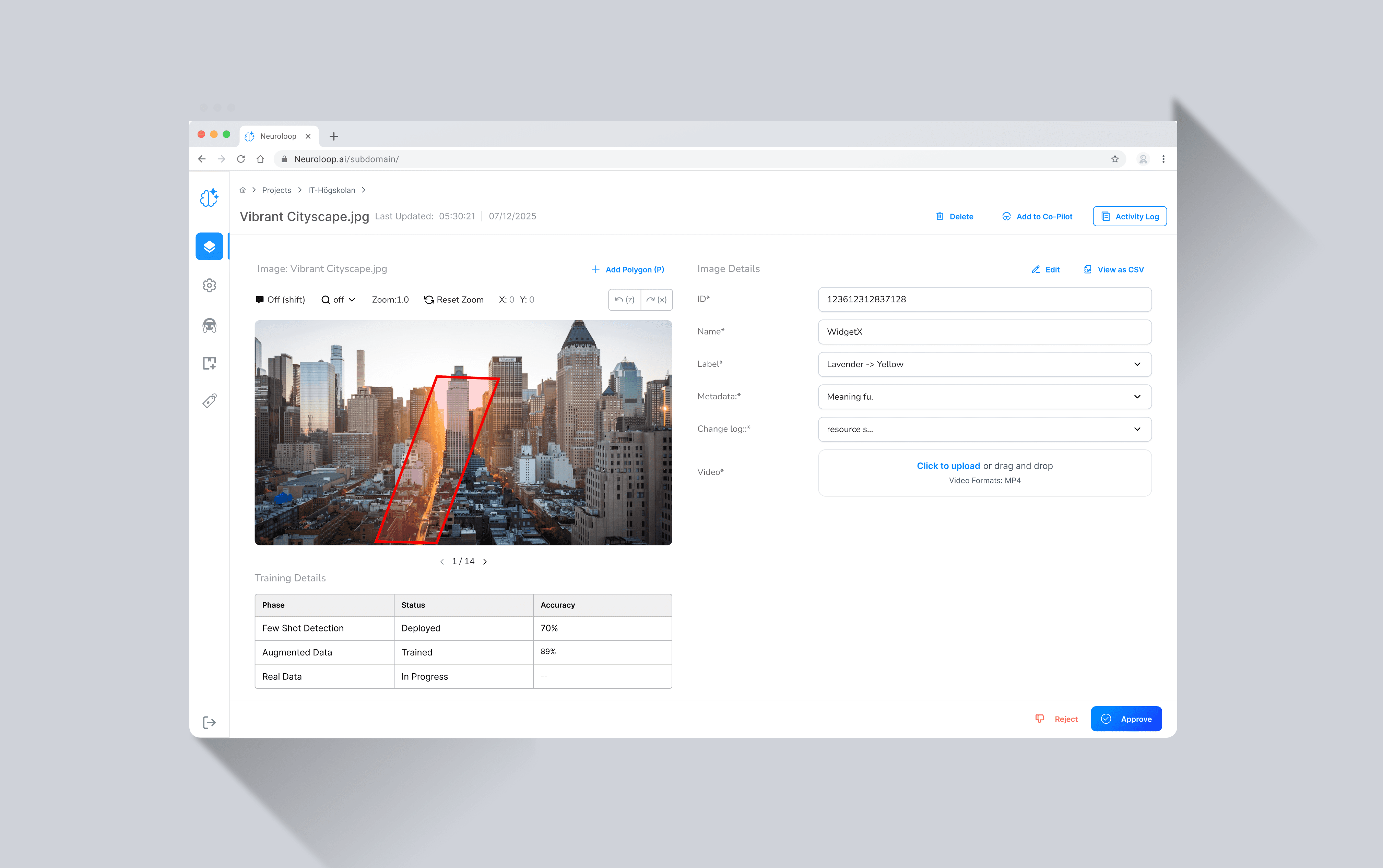
I transformed technical processes into visual experiences that showed how human feedback shapes machine behavior.
This included creating workflows, data visualizations, and feedback loops that built transparency and trust into every step of training.
The challenge was disconnected workflows, but powerfull Algorithms
1. The main challenge and the problem was that the engineers were using separate tools for labeling, validation, and retraining which felt disconnected to the engineers who had to do this process day-in and day-out.
2. Each step required manual effort and context switching. There was no real visibility into what changed after feedback was given.
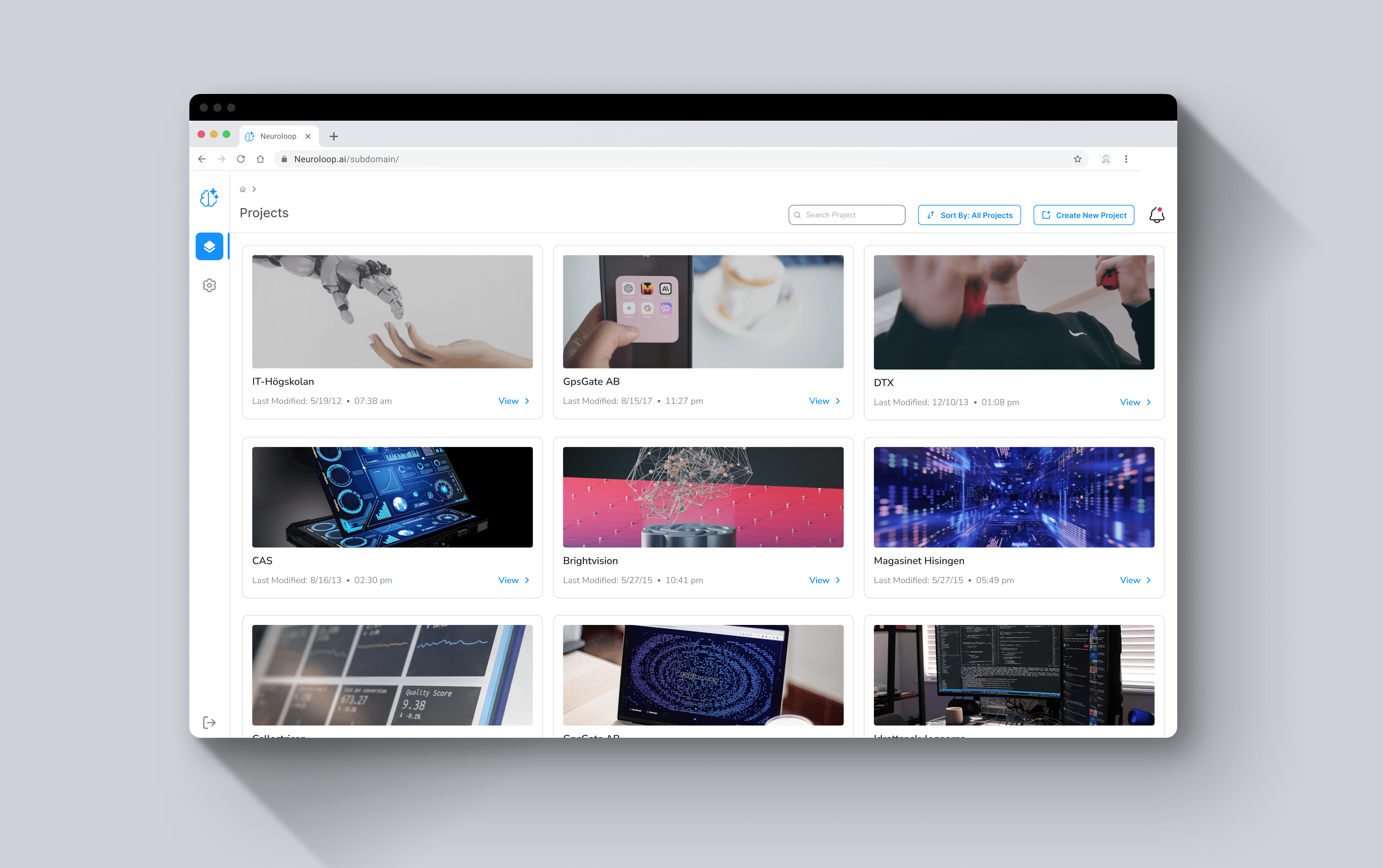
3. NeuroLoop was designed to bring all of this together and create a single loop between human insight and machine improvement
We discovered that the the real insight came from watching how people correct the AI models and fine tune it to make the AI do it magic the best
Through interviews and shadow sessions with AI engineers, we identified the same frustration everywhere.
They wanted to see how feedback influenced outcomes.
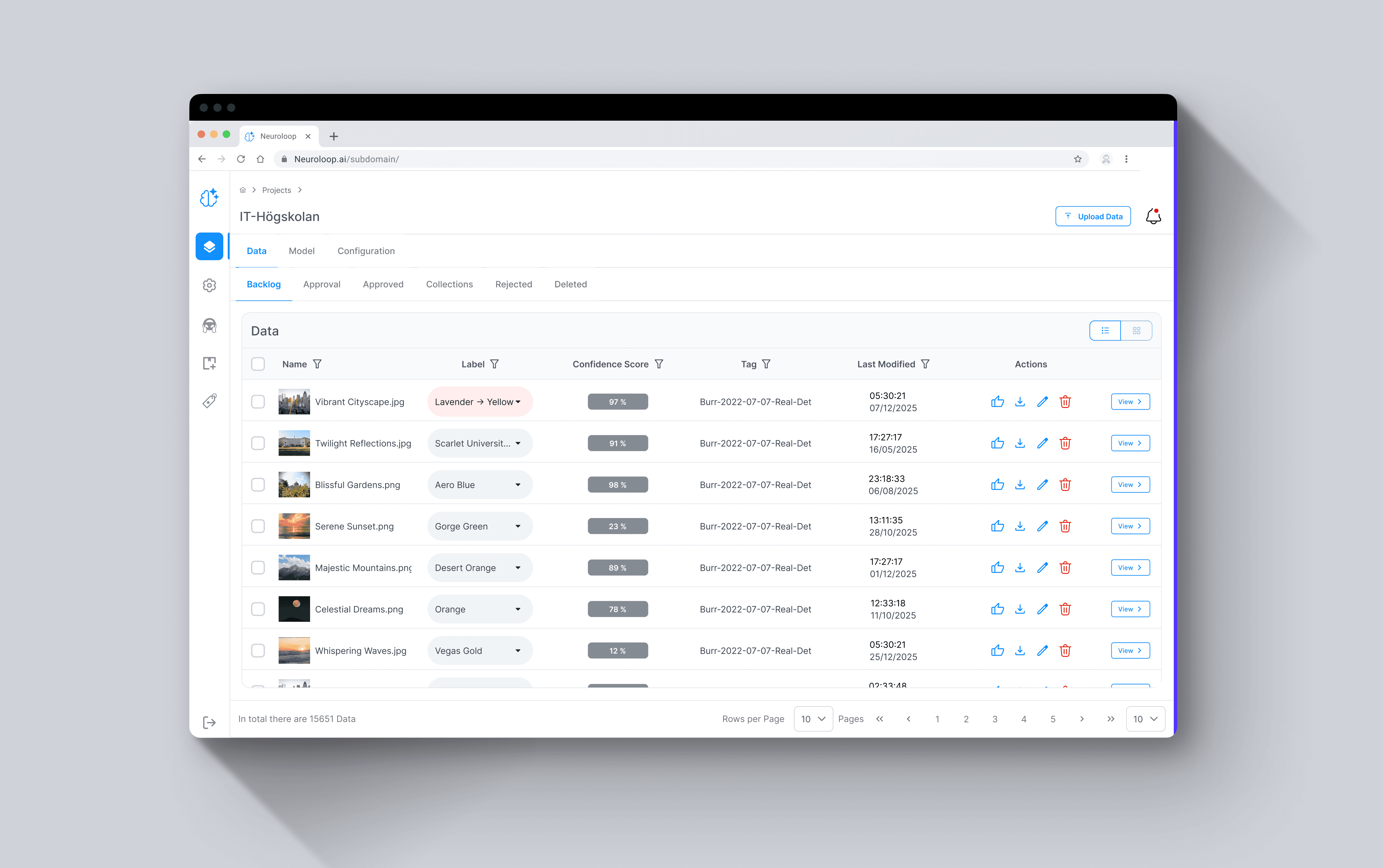
We noticed that engineers felt most engaged when they could measure progress visually.
The design needed to make model learning transparent, immediate, and rewarding.
We designed NeuroLoop with one principle: make teaching AI feel intuitive and Human and AI learn together
Through interviews and shadow sessions with AI engineers, we identified the same frustration everywhere.
They wanted to see how feedback influenced outcomes.
We noticed that engineers felt most engaged when they could measure progress visually.
The design needed to make model learning transparent, immediate, and rewarding.
How did we do it? Well! We Designed Fast and Tested Faster
We designed the interface to handle dense data without mental fatigue.
Using rapid sprints, we validated each workflow through live prototyping sessions.
The product was built in Figma using reusable components mapped to React structures.
Every interaction, from approval to correction, reinforced a sense of collaboration between the user and the model.
Testing confirmed that users learned to trust what they could see and measure.
Keyboard shortcuts and clean layouts allowed long working hours without strain.
The experience was simple, fast, and accessible for both junior and senior AI engineers.
A new benchmark for how humans teach machines.
NeuroLoop redefined reinforcement learning within the organization.
It reduced model training costs, accelerated deployment, and increased adoption across AI teams.
Today, it serves as the foundation for multiple AI accelerators and continues to evolve into an ecosystem where human insight and machine learning advance together
And the impact was WOW, where the feedback became visible, and learning accelerated
After launch, engineers were able to train models in minutes instead of hours.
Validation cycles shortened by more than 40 percent.
The platform made experimentation faster and more accurate.
Teams reported a dramatic increase in understanding how models evolve, turning frustration into curiosity.
Keywords: AI UX, Reinforcement Learning, Human-in-the-Loop, AI Training Interface, Data Visualization, DesignOps, Accessibility, Transparency, Feedback Systems, ML Platform, UX Leadership
Oct 28, 2025